
Bible Widget Landing Page
A product landing page built to market Bible Widget Verse of the Day with clearer positioning, stronger trust on first click, and a smoother path to action.

Project Overview
The problem: the app itself can be good, but if the landing page feels generic, unclear, or too templated, visitors downgrade the product before they understand it.
The solution: this landing page was built to introduce the product faster, separate search intent more cleanly, and make the handoff to the next action feel natural.
Why this matters: product marketing pages are often the first filter for trust. When the page reads clearly and looks intentional, the app feels more serious immediately.
Page in Action
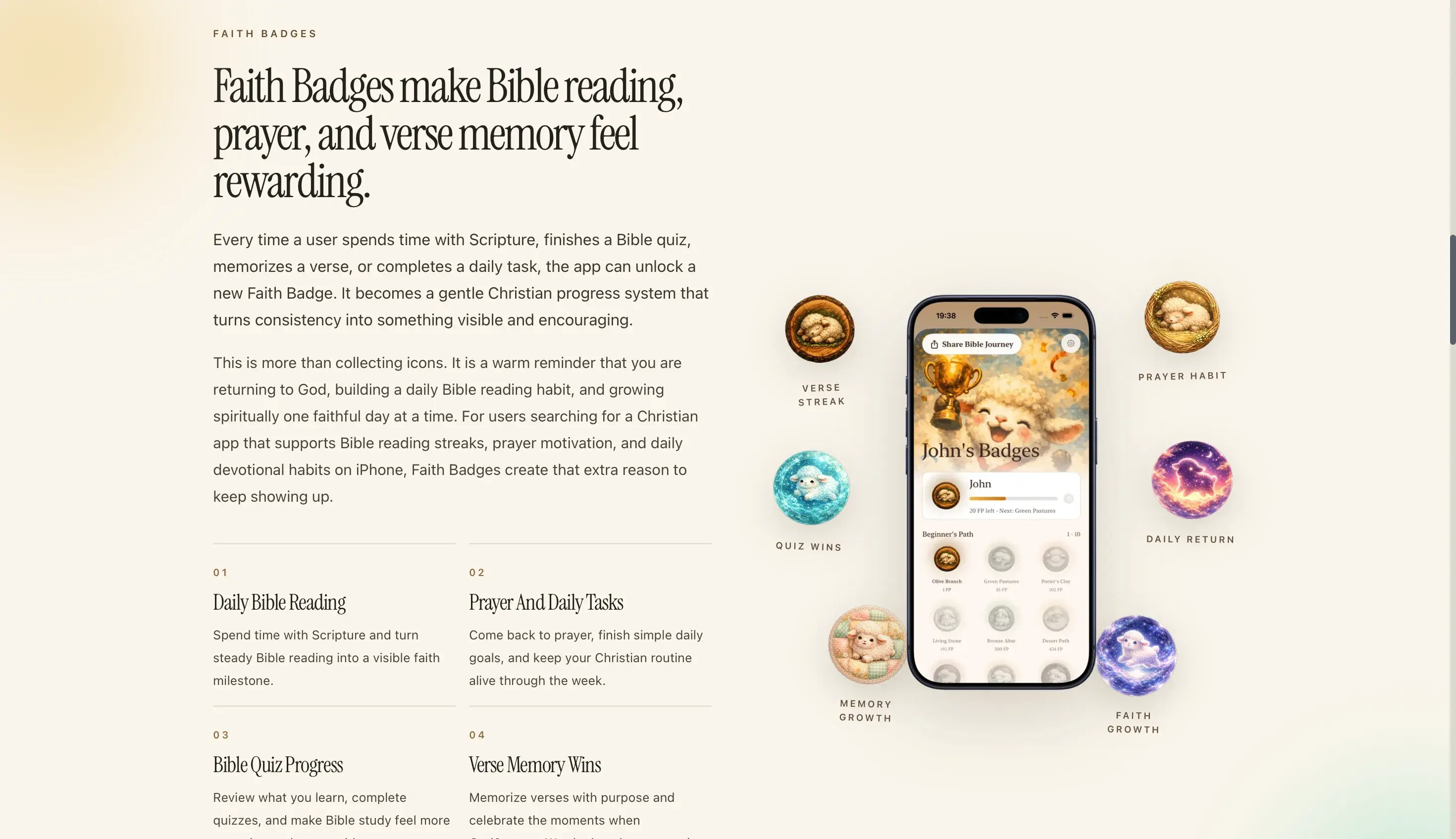
Hero, trust layer, product framing, and CTA structure in one focused landing page
What This Page Does
Clear value proposition
The first screen makes it obvious what the app is, who it is for, and why someone should care.
Better marketing message
The copy is written to attract colder traffic and move it toward the next step without feeling generic.
SEO intent separation
The landing page is positioned differently from the app case study so both pages can support search without competing.
Reusable section system
The page structure can be adapted to other product launches instead of being locked to one one-off build.
Responsive persuasion
The reading order and CTA flow still work on mobile where most app landing traffic is judged first.
Stronger App Store handoff
The page warms the visitor before the store listing has to do all the selling alone.
Page Structure
Tech Stack
Technical & Product Challenges
A product landing page needs stronger tradeoffs than “make it pretty.” These were the main constraints behind the build.
Landing page and app page had different jobs
The page had to sell without feeling bloated
The build needed company appeal, not only end-user appeal
Frequently Asked Questions
What is this page actually selling?
It shows how the Bible Widget product can be marketed through a clearer landing page while also acting as a portfolio case study for similar client work.
Why is this separate from the Bible Widget app page?
Because the app page and the landing page serve different search and buying states. One explains the product deeply, the other sells the product fast.
Can this structure work for other app categories?
Yes. The flow is general enough for SaaS, utility, subscription, or consumer mobile apps that need stronger first-impression marketing.
Final Note
The goal here was not to show more sections. It was to make the product easier to understand and easier to trust.
This page is a cleaner case study for how I structure app landing pages when the work needs to support both product marketing and company-facing presentation.